
Grokepedia.com | ai encyclopedia by elon musk | grokipedia app
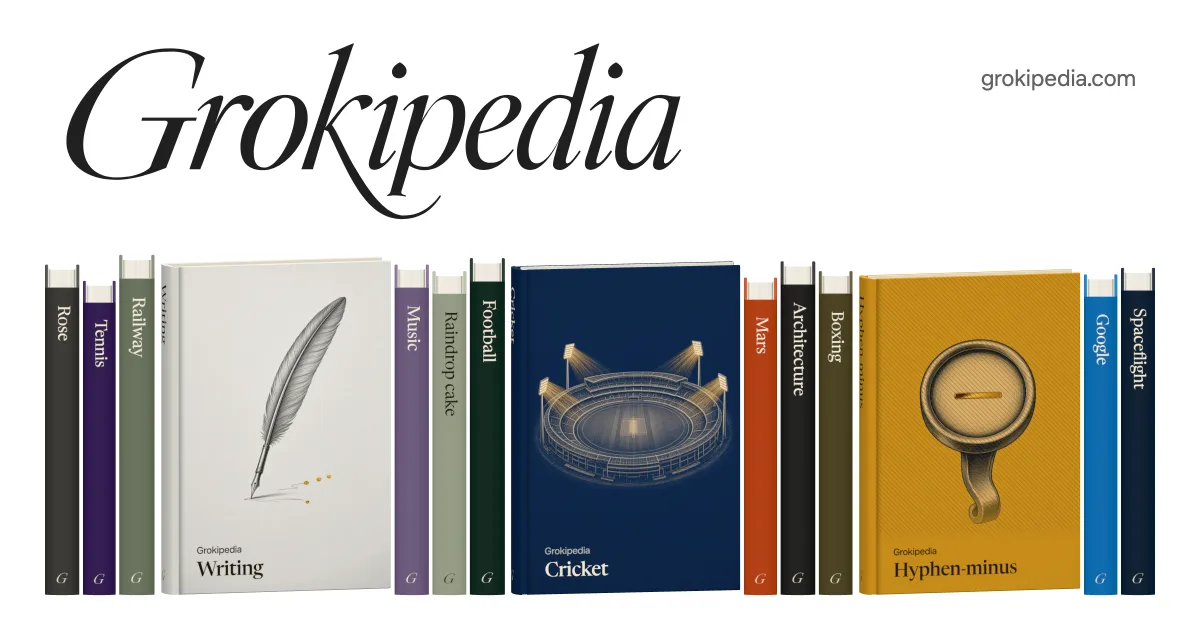
Grokipedia is an online encyclopedia written mostly by artificial intelligence. It is run by xAI, Elon Musk's AI company, and it lives at grokipedia.com. Think of it as Wikipedia's AI-powered cousin: instead of thousands of human volunteers writing and editing articles by hand, Grokipedia's articles are generated and checked by AI models from xAI's Grok family.
Musk launched it as an alternative to Wikipedia. He has said publicly that he believes Wikipedia has ideological bias, and that an AI-built encyclopedia could do better. Whether it actually does better is something people still argue about, and we will get to that below.
A quick note on the name: the official spelling is Grokipedia (Grok + encyclopedia). This site covers the real service in plain language. We are an independent guide and are not affiliated with xAI, Elon Musk, or the Grokipedia team.
How Grokipedia started
The story starts on September 30, 2025, when Musk posted on X: "We are building Grokipedia @xAI. Will be a massive improvement over Wikipedia. Frankly, it is a necessary step towards the xAI goal of understanding the Universe."
Version 0.1 launched on October 27, 2025, with around 885,000 articles. Launch day was rocky — the site briefly crashed under heavy traffic. About a month later, version 0.2 arrived and the article count jumped past six million. For comparison, the English Wikipedia took more than twenty years of volunteer work to reach roughly 6.8 million articles. Grokipedia tried to match that scale in weeks using AI generation.
Then things went quiet. From around April 2026 to September 2026, the site appeared to stop updating. In August 2026, the legal publication Lawfare reported that, as far as it could tell, no entry had changed in more than three months. Then in late September 2026, updates started flowing again, and on September 30, 2026, version 0.3 launched with a fresh design: a new logo, featured articles, a most-read list, and a live tracker of the latest edits — the full timeline has every date.
How it actually works
Grokipedia does not work like Wikipedia. On Wikipedia, anyone can click "edit" and change an article directly. On Grokipedia, you cannot. Instead, the process looks like this:
- AI writes the articles. Grok models generate encyclopedia entries, starting from a large base of existing reference material.
- Readers suggest fixes. If you spot a mistake, you can submit an edit suggestion through a pop-up form, or ask Grok to propose a change.
- Grok reviews everything. The site's own wording is: "Proposed by readers, checked against sources, approved by Grok." All changes are applied centrally by the AI, not directly by users.
The homepage also has a "Something missing?" feature: type in a topic, and Grok will write a new article for it, checked against sources.
How big is it?
By early 2026, Grokipedia reported more than six million articles and over 450,000 approved edits on its live stats page. The homepage today shows featured articles, a most-read ranking of what the world is reading, and a live feed of the latest edits as they get approved.
Scale is the easy part for AI. The harder question is quality: are six million AI-generated articles actually reliable? That is where the debate lives.
Grokipedia vs Wikipedia
People ask about this constantly, so here is the honest comparison:
- Who writes: Wikipedia articles are written and debated by human volunteers. Grokipedia articles are generated by AI, with humans only able to suggest corrections.
- Editing: Wikipedia lets anyone edit directly (with community review). Grokipedia routes every change through Grok's approval.
- Speed: Grokipedia can generate and update articles far faster than volunteers can. When it is actively maintained, facts can be refreshed in near real time.
- Transparency: Wikipedia's edit history and talk pages are public, so you can see exactly who changed what and why. Grokipedia's process is more of a black box — you see the suggestion and the result, but not the full deliberation.
- Bias: Musk's whole argument is that Wikipedia leans a certain way politically and that AI can be more neutral. Critics reply that AI models have their own biases, learned from their training data, and that "AI-written" does not automatically mean "neutral."
- Cost: Both are free to read.
The controversies, honestly
No honest guide can skip the rough patches:
- The quiet months. Between April and September 2026, the site barely changed. For a project sold as "constantly updated by AI," going months without visible updates raised real questions about whether xAI was still invested. Updates have resumed since, but the episode dented trust.
- The bias question. Musk says Grokipedia fixes Wikipedia's bias. But researchers and journalists have pointed out that AI models reflect the biases in the data they were trained on. An AI encyclopedia is not bias-free by default — it is bias-different, and the difference is harder to inspect.
- Accuracy. AI models sometimes state false things confidently. Grokipedia's answer is that Grok checks suggestions against sources before approving them. How well that works in practice is still being tested in public.
- The name game. Musk has said that once the site is good enough, it will take the name "Encyclopedia Galactica" — a nod to Isaac Asimov's Foundation series. It has not happened yet.
Grokipedia right now (October 2026)
As of this writing, Grokipedia is on version 0.3 with the refreshed design: the homepage shows featured articles presented as spinnable digital books, a most-read shelf, and a live edits tracker. Article pages got cleaner fact tables at the top. Content-wise, articles look largely similar to before — the v0.3 update was mostly about design and getting the update pipeline moving again.
Musk has not posted about Grokipedia on X since February 2026, which is worth knowing: the project's public momentum currently comes more from the product team (like xAI's head of design, who teased the v0.3 refresh) than from Musk himself.
How to use it
Using Grokipedia is simple. Go to grokipedia.com — it is free, no account needed for reading. Search for a topic or browse the featured and most-read articles. If you want to suggest a correction, you will need to log in, and then you can submit your suggestion for Grok to review.
There is no official Grokipedia app to download. It is a website, and that is the whole product. Our download page explains this and links to the official site.
Common questions
Is Grokipedia free?
Yes. Reading is free with no paywall.
Who owns Grokipedia?
xAI, Elon Musk's artificial intelligence company.
Can I edit Grokipedia articles?
Not directly. You can suggest edits, and Grok decides whether to apply them.
Is Grokipedia better than Wikipedia?
That depends on what you value. It is faster and bigger per unit of effort, but Wikipedia has decades of human editorial debate behind it. Musk claims it is already better; independent observers say the jury is still out.
What is Encyclopedia Galactica?
The name Musk says Grokipedia will eventually take, referencing Isaac Asimov's Foundation books. It has not happened yet.
Is there a Grokipedia app?
No official app exists. Anyone offering a "Grokipedia app" download outside grokipedia.com is not official.
Where this site stands
This is an independent informational guide. We are not affiliated with xAI, Elon Musk, or the Grokipedia project, and we do not speak for them. Our goal is to explain what Grokipedia is, how it works, and where it stands — in plain language, with facts you can check. For the official service itself, visit grokipedia.com.
Kenji Sato
Original Post
How do the reader suggestions actually work? The post says articles are generated and checked by AI, but also that readers can suggest things. Is there a feedback loop where corrections get folded back in, or do you just submit and hope?
Small thing but I'm glad this page spells it correctly — Grokipedia, not Grokepedia. Half the search results spell it wrong and land people on junk domains. Nice to have a plain-language guide that isn't trying to sell anything.
The comparison to Wikipedia is what brought me here. 6 million articles in a month versus 20+ years of volunteer work — that scale is wild, but it makes me wonder about accuracy. An AI that writes that fast must also hallucinate that fast. Has anyone compared error rates between the two?